1033 stories
·
0 followers

What's next after the Trump administration revokes key finding on climate change?

1 Share

Following three of the warmest years on record, as scientists reckon with climate tipping points and states and cities grapple with the escalating cost of extreme weather and more intense wildfires, the Trump administration this week is expected to formally eliminate the US government’s role in controlling greenhouse gas pollution.

By revoking its 17-year-old scientific finding that greenhouse gases endanger public health and welfare, the Environmental Protection Agency will demolish the legal underpinning of its authority to act on climate change under the Clean Air Act.

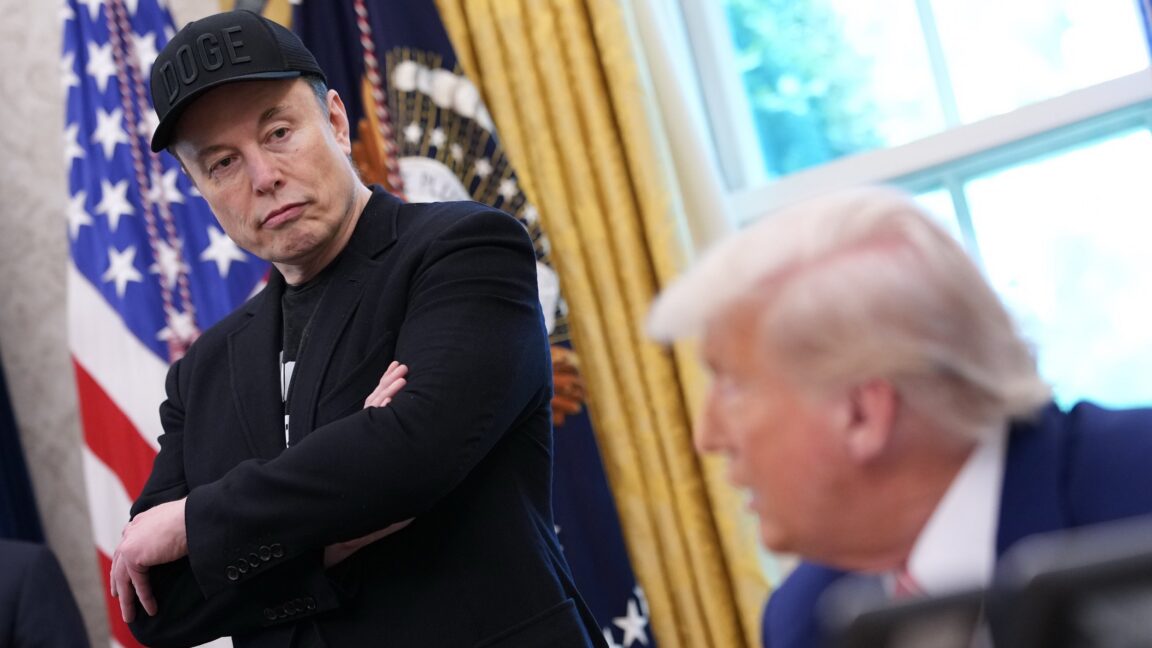
EPA Administrator Lee Zeldin will be alongside President Donald Trump for an event Wednesday focused on boosting US use of coal, as mercury and air toxics standards are repealed. That is expected to be a prelude to Zeldin finalizing the endangerment finding repeal, an assignment the president handed him in an executive order signed on the first day of his second term in office.

“President Trump will be taking the most significant deregulatory actions in history to further unleash American energy dominance and drive down costs,” White House spokeswoman Karoline Leavitt said Tuesday.

The move marks a far more radical retreat on climate change compared to the steps to weaken regulations that were taken in Trump’s first term. Instead, Zeldin’s team has asserted that the EPA never had the power to write such rules to begin with.

Climate action advocates and Democrat-led states have vowed to challenge the repeal of the endangerment finding, a decision that not only erases President Joe Biden’s most important climate regulations, but is designed to make it more difficult for any future administration to rein in fossil fuel pollution from vehicles, power plants, or other industries.

“Communities across the country will bear the brunt of this decision—through dirtier air, higher health costs, and increased climate harm,” said Michelle Roos, executive director of the Environmental Protection Network, a group of former EPA employees, in a statement. “The Trump EPA is surrendering its responsibility, turning its back on families and communities already facing the highest pollution and health risks, and dismantling decades of science and progress.”

Said Joseph Goffman, EPA’s top air official during the Biden administration, “This move is a fundamental betrayal of EPA’s responsibility to protect human health. It is legally indefensible, morally bankrupt, and completely untethered from the scientific record.”

The battle seems destined to land in the Supreme Court, forcing it to revisit its landmark 2007 ruling that greenhouse gases were pollutants under the Clean Air Act. The outcome of a legal challenge is by no means clear, with all five of the justices who formed the majority in that case, Massachusetts v. EPA, dead or retired.

To help readers sort through the meaning of the highly technical legal maneuver by the Trump administration, and look to what comes next, Inside Climate News tackled some of the key questions raised by the reversal of the endangerment finding:

Does this mean that scientists now think climate change is not a problem?

A panel of the National Academies of Sciences, Engineering, and Medicine (NASEM) put it bluntly: “The evidence for current and future harm to human health and welfare created by human-caused [greenhouse gases] is beyond scientific dispute,” the scientists said in a report submitted to the EPA as it launched its repeal process. They said that the endangerment finding that the Obama administration adopted in 2009 is now supported by longer observational records and multiple new lines of evidence.

The most recent National Climate Assessment in 2023 reported that temperatures in the contiguous United States had increased by 2.5° F (1.4° C) since 1970, a marked increase from the 1.3° F (0.7° C) warming over the 20th century that the EPA reported in 2009. Annual heat-wave frequency has tripled since the 1960s, storms are producing more intense rains, and wildfires have become more severe. Hurricanes have been intensifying more rapidly since the early 1980s, and they break up slower. “Multiple lines of evidence show that greenhouse gas emissions from human activities are the primary driver of the observed long-term warming trend and other changes in Earth’s energy balance,” the NASEM panel said. “Natural forces cannot account for observed changes.”

The Trump administration didn’t ask NASEM for input, even though the Clean Air Act indicates that the EPA should consult with the National Academies on scientific issues. Instead, NASEM had to self-fund and fast-track its work to meet the tight deadline set for public comment last September. The group noted that it worked in the wake of a slew of climate-driven disasters in the United States: “the heavy rainfall of Hurricane Helene that destroyed homes and roads in the mountains of North Carolina, the fast-moving wildfires that displaced thousands in Los Angeles and affected air quality for miles around, and the rapid flooding of the Guadalupe River in central Texas that led to at least 135 fatalities.”

Such manifestations, and analytical methods that have allowed researchers to attribute them to climate change, are the most significant evolution in climate understanding since 2009, said Phil Duffy, chief scientist for the nonprofit group Spark Climate Solutions. “The evidence for societal harms from greenhouse gas emissions has become more of a present day reality than something that’s predicted and expected,” he said. Duffy, a top science adviser to President Joe Biden, was not involved in the NASEM report but was author of a peer-reviewed 2019 study that also found the scientific support for the endangerment finding had withstood the test of time.

When asked about the National Academies’ work, the EPA has stressed that its decision was based on new legal doctrines. In its proposal last year, the EPA asserted that the uncertainties “are more significant than previously believed,” and that “the more pessimistic assumptions” in the 2009 finding have not been borne out.

It was not immediately clear whether the agency, in its final proposal, would continue to lean on the well-worn science denial talking points compiled by the so-called “Climate Working Group,” five prominent climate skeptics hand-picked by Energy Secretary Chris Wright, a former oil executive, as advisors for the endangerment finding repeal process. More than 85 climate scientists submitted a report to the EPA detailing errors in the Climate Working Group’s report, and a federal judge ruled that Wright broke the law in establishing the group without regard to the Federal Advisory Committee Act’s transparency and fairness provisions.

In its original proposal, the Trump EPA relied on recent Supreme Court decisions it said restrict its authority to act on climate under current law, and close observers expect that will be the administration’s strategy.

“We expect EPA to revoke the endangerment finding for legal reasons, not scientific ones,” said Jeff Holmstead, a partner at the Bracewell law firm who served as head of EPA’s air office during President George W. Bush’s administration. “This is the only way that they can ‘drive a stake through the heart of climate religion,’ as Administrator Zeldin has said.”

If this is about law and not science, how has the law changed since 2009?

The second Trump administration had the confidence to take on the endangerment finding largely because of how the president reshaped the Supreme Court in his first term, legal experts say. In two 6-3 decisions from a conservative majority bolstered by Trump’s three appointees, the justices created new doctrine that limited the power of federal regulatory agencies like the EPA.

“We’ve had an administrative law revolution,” said industry lawyer Matthew Leopold, who was the EPA’s general counsel in Trump’s first term, speaking at a forum last fall at the American Enterprise Institute (AEI), a conservative think tank. “The playing field that the Obama administration was playing on [when it made the endangerment finding] looks entirely different today.”

The Supreme Court struck down Obama’s signature climate policy, the Clean Power Plan, in 2022. And in that case, West Virginia v. EPA, the court established its so-called “major questions doctrine,” saying regulation of greenhouse gases was an issue of such great economic and political significance that the EPA could not regulate them without explicit direction from Congress. Then, in a 2024 case over fishing regulations, the Supreme Court overturned the principle that had guided regulatory law for 40 years, saying that federal agencies were due no deference in interpreting ambiguities in the law. The court said judges, not agencies, should decide the meaning of the law, even though in the environmental realm that typically involves application of science and knowledge of the best available technologies for reining in pollution.

Climate action advocates, however, argue that the Trump administration faces an uphill battle in defending its repeal of the endangerment finding, largely because the Supreme Court already has interpreted the Clean Air Act as applying to greenhouse gases—in Massachusetts v. EPA. The court has repeatedly declined efforts to overturn that precedent, including in the West Virginia v. EPA case.

“To be sure… the court limited precisely how EPA may regulate those pollutants, but even the current court has not challenged whether EPA may do so,” said David Doniger, senior attorney and strategist for the Natural Resources Defense Council, at a briefing for reporters several weeks before the decision was announced.

Doniger’s colleague, Meredith Hankins, legal director for NRDC’s climate program, says the Trump EPA is clearly relying on legal strategy since it can not offer a scientific rationale for repealing the endangerment finding. “Since EPA’s attempts to make up their own climate science has been laughed out of the room, the agency is left trying to make these tortured legal arguments that do not stand up to the slightest scrutiny,” she said.

Both The Washington Post and POLITICO reported in late January that debate within the administration over the EPA’s legal approach was delaying the process. Outside the administration, even lawyers who supported the move to overturn the endangerment finding acknowledged the challenges. “They are working to break the tool itself,” said Michael Buschbacher, a top attorney in litigation against greenhouse gas standards for vehicles, speaking at the AEI endangerment finding forum. Buschbacher said the many potential pitfalls make it “like a regulatory Everest … It’s dangerous. It’s a high-risk, high-reward endeavor.”

The Trump administration’s best chance of scaling that mountain is if it can make it to the Supreme Court, he said: “That’s probably where this is going to go if this administration is going to prevail.”

So is this “final” decision really final?

Not in the least. The EPA’s regulatory determinations are challenged in court more than those of any other federal agency, according to tracking by the Institute for Policy Integrity at New York University, and this high-stakes decision will not be an exception.

Climate action advocates see the endangerment finding as a key line they must defend in what they see as the extraordinary all-out assault on environmental protection in the second Trump term. “Put simply, this is a gift-wrapped package for the fossil fuel industry,” said Manish Bapma, CEO of NRDC. “It is unscientific, it is bad economics, and it is illegal. So we’re gonna fight it.”

The first stop will be the DC Circuit Court of Appeals, which has exclusive jurisdiction over appeals of nationally applicable regulations. Seven of the 11 judges on that court were appointed by Presidents Obama or Biden.

How hard would it be for a future administration to restore the finding that greenhouse gas emissions are a danger to human health and the environment?

It depends on the courts. If Massachusetts v. EPA is still standing at the end of the battle, the EPA will still have the power to regulate greenhouse gas emissions, like an arrow in its quiver that it just has to decide to use. But if the Supreme Court were to rule the Clean Air Act gives the EPA no authority over greenhouse gas emissions—reversing the Massachusetts decision and perhaps later cases that relied upon it—that leaves future administrations with an empty quiver.

“Then there would be the problem of a lack of authority, unless Congress wrote a new law,” said Doniger of NRDC.

But it has been more than two decades since a bipartisan consensus on climate action seemed fleetingly within reach in Congress. Congressional action has grown more elusive even as public support for action—especially deployment of clean energy—has grown. Democrats were able to get a $390 billion investment in clean energy, the Inflation Reduction Act, passed without GOP support in 2022.

The Biden climate plan was a carrot-and-stick approach to drive the United States to cut its carbon emissions 50 percent by 2030. The IRA’s incentives and subsidies were meant to drive down the price of clean energy, while EPA regulation pushed industry to make a transition away from fossil fuels. But over the past year, Trump and the Republican Congress have clawed back the IRA’s carrots. By revoking its endangerment finding, the EPA will also drop its stick.

Holmstead argued that withdrawal of the endangerment finding might actually force Congress to try to reach a bipartisan agreement on climate legislation: “The business community would like to have the long-term certainty that would come with bipartisan legislation, and if the environmental community sees that it can’t get what it wants from EPA, they might be more willing to make the kind of compromises that are always required to pass meaningful legislation.” But Holmstead added that he did not expect that to happen during the Trump administration.

No matter the outcome of the coming litigation over the endangerment finding repeal, the fossil fuel industry has won time. The Trump administration has ensured that the nation that has contributed the most to the atmosphere’s overload of climate pollution, the United States, will be entangled in litigation during years that scientists have said are crucial for driving down the pollution that is increasing risks and costs for communities as it alters the planet.

This story originally appeared on Inside Climate News.

Marianne Lavelle is the Washington, DC, bureau chief for Inside Climate News. She has covered environment, science, law, and business in Washington, DC, for more than two decades. She has won the Polk Award, the Investigative Editors and Reporters Award, and numerous other honors. Lavelle spent four years as online energy news editor and writer at National Geographic. She spearheaded a project on climate lobbying for the nonprofit journalism organization, the Center for Public Integrity. She also has worked at U.S. News and World Report magazine and The National Law Journal. While there, she led the award-winning 1992 investigation, “Unequal Protection,” on the disparity in environmental law enforcement against polluters in minority and white communities. Lavelle received her master’s degree from Columbia University Graduate School of Journalism, and is a graduate of Villanova University.
Read full article

Comments


Read the whole story
Share this story
Delete

El Paso airport closed after military used new anti-drone laser to zap party balloon

1 Share

On Tuesday night, the Federal Aviation Administration closed airspace up to 18,000 feet above the El Paso International Airport in Texas, saying the restrictions would be in place for 10 days. Then, less than 10 hours later, the federal agency reopened the airspace, allowing planes to land and take off at the busy airport.

About an hour after lifting the restrictions, US Secretary of Transportation Sean Duffy, whose responsibilities include overseeing the FAA, explained the unexpected closure by saying, "The FAA and DOW acted swiftly to address a cartel drone incursion." (The Trump Administration refers to the Department of Defense as the Department of War, or DOW, although its legal name remains the former.)

Not everyone agrees with Duffy's account.

Based upon reporting from The New York Times and other publications, the military has been developing high-energy lasers to bring down drones. The FAA and US military officials had been discussing tests of the new weapon from the nearby Fort Bliss Army base. However, the FAA had not resolved all of its concerns about airplane safety from the tests.

Despite these apparently lingering concerns from the FAA, the military went ahead with a test earlier this week against what was thought to be a drone. The object was a party balloon.

Cartel drones a serious threat

That is not to make light of drone incursions. This is a real issue along the US border with Mexico, where cartels increasingly fly drones for surveillance. They are particularly useful for pinpointing the location of US Border Patrol agents to assist the cartel in smuggling non-citizens across the border into the United States.

One of the many lessons from the war in Ukraine, which has rapidly pushed forward drone technology in contested environments, is that it is not practical to shoot down drones with conventional missiles. So it is understandable that the US military is looking at alternatives. This all culminated in some sort of snafu between the FAA and military officials regarding coordination with this week's test.

Whether it was genuine concern about air travelers, a show of force, a fit of pique, or something else, the FAA decided on Tuesday evening to take the extraordinary step of abruptly closing an airport that serves more than 3 million passengers a month. The proposed 10-day closure of the airport was remarkably long.

Moreover, this action was taken without consulting local or state officials in Texas—who are understandably outraged—or reportedly even the White House.

"I want to be very, very clear that this should’ve never happened," El Paso Mayor Renard Johnson said during a news conference on Wednesday. "That failure to communicate is unacceptable."

Read full article

Comments


Read the whole story
Share this story
Delete

Trump's latest plan to revive coal power: Make the military buy it

1 Share

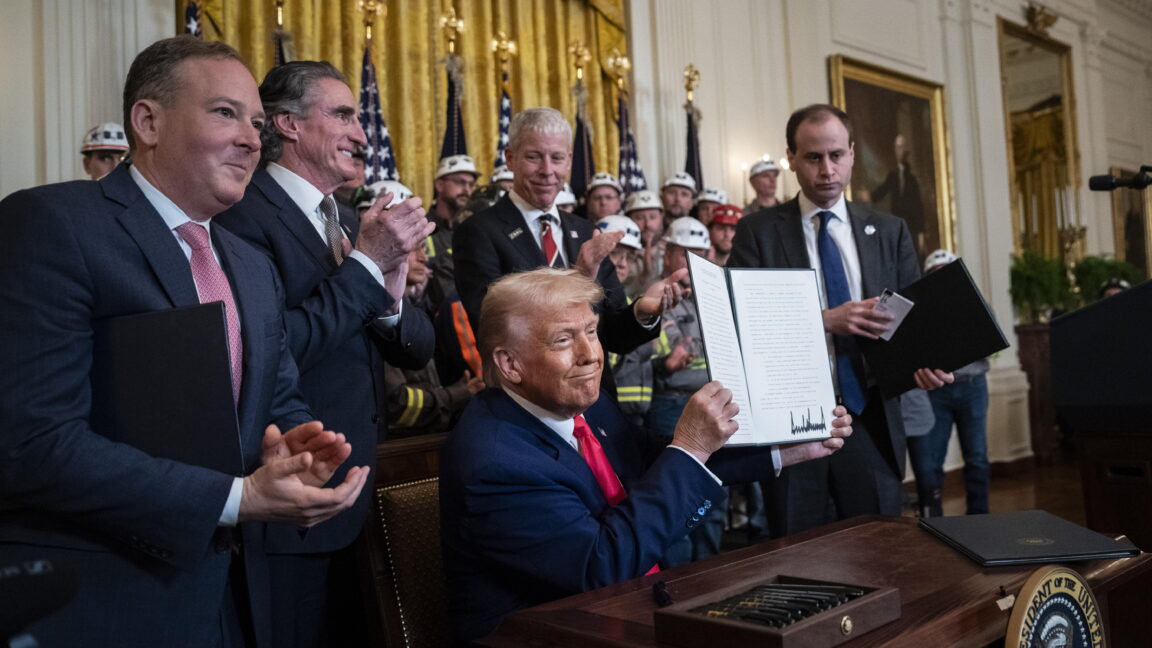
On Wednesday, a fossil-fuel lobbying group called the Washington Coal Club awarded President Trump a trophy that named him the "Undisputed Champion of Clean, Beautiful Coal." Trump took advantage of the opportunity to take his latest shot at reviving the fortunes of the US's most polluting source of electricity: an executive order that would make the military buy it.

Coal is the second most expensive source of power for the US grid, eclipsed by gas, wind, solar, hydro—everything other than nuclear power. It also produces the most pollution, including particulates that damage human lungs, chemicals that contribute to acid rain, and coal ash that contains many toxic metals. It also emits the most carbon dioxide per unit of energy produced. Prior to Trump's return to office, the US grid had been rapidly moving away from its use, including during his first term.

Despite the long-standing Republican claims to support free markets, the second Trump administration has determined that the only way to keep coal viable is direct government intervention. Its initial attempts involved declaring an energy emergency and then using that to justify forcing coal plants slated for closure to continue operations. The emergency declaration relied on what appears to be a tenuous interpretation of the Federal Power Act, and the administration was already facing a lawsuit challenging these actions.

Today's executive order takes a different route to propping up coal: artificially inflating demand. "The Secretary of War, in coordination with the Secretary of Energy," the order reads, "shall seek to procure power from the United States coal generation fleet by approving long-term Power Purchase Agreements, or entering into any similar contractual agreements, with coal-fired energy production facilities to serve Department of War installations or other mission-critical facilities."

The justification for this seems to come from an alternate reality with little relationship to the US grid. "It's going to be less expensive and actually much more effective than what we have been using for many, many years," Trump said at the event. "And again, with the environmental progress that's been made on coal, it's going to be just as clean." None of that is true.

The executive order instead seeks to highlight coal's supposed ability to produce a constant power output, touting the "proven reliability of our coal-fired generation fleet in providing continuous, on-demand baseload power." This seemingly ignores Texas' recent experience, in which coal plants contributed significantly to the collapse of the state grid, having gone offline for a wide range of reasons.

The Trump administration, however, has rarely let spurious justifications stand in the way of its preferred policy actions. The key action here is likely to be locking the military into long-term contracts that would persist beyond the end of Trump's term in 2029.

Read full article

Comments


Read the whole story
Share this story
Delete

Victory for Elon Musk: US labor board abandons authority over SpaceX

1 Share

The National Labor Relations Board abandoned a Biden-era complaint against SpaceX after a finding that the agency does not have jurisdiction over Elon Musk's space company. The US labor board said SpaceX should instead be regulated under the Railway Labor Act, which governs labor relations at railroad and airline companies.

The Railway Labor Act is enforced by a separate agency, the National Mediation Board, and has different rules than the National Labor Relations Act enforced by the NLRB. For example, the Railway Labor Act has an extensive dispute-resolution process that makes it difficult for railroad and airline employees to strike. Employers regulated under the Railway Labor Act are exempt from the National Labor Relations Act.

In January 2024, an NLRB regional director alleged in a complaint that SpaceX illegally fired eight employees who, in an open letter, criticized CEO Musk as a “frequent source of embarrassment." The complaint sought reinstatement of the employees, back pay, and letters of apology to the fired employees.

SpaceX responded by suing the NLRB, claiming the labor agency’s structure is unconstitutional. But a different issue SpaceX raised later—that it is a common carrier, like a rail company or airline—is what compelled the NLRB to drop its case. US regulators ultimately decided that SpaceX should be treated as a "common carrier by air" and "a carrier by air transporting mail" for the government.

SpaceX deemed a common carrier

In a February 6 letter to attorneys who represent the fired employees, NLRB Regional Director Danielle Pierce said the agency would defer to a National Mediation Board opinion that SpaceX is a common carrier:

In the course of the investigation and litigation of this case, a question was presented as to whether the Employer’s operations fall within the jurisdiction of the Railway Labor Act (“RLA”) rather than the [National Labor Relations] Act. As a result, consistent with Board law, the matter was referred to the National Mediation Board (“NMB”) on May 21, 2025 for an opinion as to whether the Employer is covered by the RLA. On January 14, 2026, the NMB issued its decision finding that the Employer is subject to the RLA as a common carrier by air engaged in interstate or foreign commerce as well as a carrier by air transporting mail for or under contract with the United States Government. Accordingly, the National Labor Relations Board lacks jurisdiction over the Employer and, therefore, I am dismissing your charge.

The letter was provided to Ars today by Anne Shaver, an attorney for the fired SpaceX employees. "The Railway Labor Act does not apply to space travel," Shaver told Ars. "It is alarming that the NMB would take the initiative to radically expand the RLA’s jurisdiction to space travel absent direction from Congress, and that the NLRB would simply defer. We find the decision to be contrary to law and public policy."

We contacted the NLRB today and will update this article if it provides a response. The NLRB decision was previously reported by Bloomberg and The New York Times.

"Jennifer Abruzzo, NLRB general counsel under former President Joe Biden, had rejected SpaceX’s claim that allegations against the company should be handled by the NMB," Bloomberg wrote. "After President Donald Trump fired her in January last year, SpaceX asked the labor board to reconsider the issue."

NLRB looked for way to settle

In April 2025, SpaceX and the NLRB told a federal appeals court in a joint filing that the NLRB would ask the NMB to decide whether it had jurisdiction over SpaceX. The decision to seek the NMB's opinion was made "in the interests of potentially settling the legal disputes currently pending between the NLRB and SpaceX on terms mutually agreeable to both parties," the joint filing said.

Shaver provided a July 2025 filing the employees' attorneys made with the NMB. The filing said that despite SpaceX claiming to hold itself out to the public as a common carrier through its website and certain marketing materials, the firm doesn't actually carry passengers without "a negotiated, bespoke contract."

"SpaceX’s descriptions of its transport activities are highly misleading," the filing said. "First, regarding human spaceflight, other than sending astronauts to the ISS on behalf of the US and foreign governments, it has only ever agreed to contract with two very wealthy, famous entrepreneurs. The Inspiration4 and Polaris Dawn missions were both for Jared Isaacman, CEO of Shift4 and President Trump’s former pick to lead NASA prior to his public falling out with SpaceX CEO Elon Musk. Fram2 was for Chun Wang, a cryptocurrency investor who reportedly paid $55 million per seat. A total of two private customers for human spaceflight does not a common carrier make."

The letter said that SpaceX redacted pricing information from marketing materials it submitted as exhibits. "If these were actually marketing materials provided to the public, there would be no need to redact pricing information," the filing said. "SpaceX’s redactions underscore that it provides such materials at its discretion to select recipients, not to the public at large—far from the conduct of a true common carrier."

The ex-employees' attorneys further argued that SpaceX is not engaged in interstate or foreign commerce as defined by the Railway Labor Act. "SpaceX’s transport activities are not between one state or territory and another, nor between a state or territory and a foreign nation, nor between points in the same state but through another state. Rather, they originate in Florida, Texas, or California, and go to outer space," the filing said.

Spaceflight company and... mail carrier?

The filing also disputed SpaceX's argument that it is a “carrier by air transporting mail for or under contract with the United States Government.” Evidence presented by SpaceX shows only that it carried SpaceX employee letters to the crew of the International Space Station and "crew supplies provided for by the US government in its contracts with SpaceX to haul cargo to the ISS," the filing said. "They do not show that the government has contracted with SpaceX as a 'mail carrier.'"

SpaceX's argument "is rife with speculation regarding its plans for the future," the ex-employees' attorneys told the NMB. "One can only surmise that the reason for its constant reference to its future intent to develop its role as a 'common carrier' is the lack of current standing in that capacity." The filing said Congress would have to add space travel to the Railway Labor Act's jurisdiction in order for SpaceX to be considered a common carrier.

When asked about plans for appeal, Shaver noted that they have a pending case in US District Court for the Central District of California: Holland-Thielen et al v. SpaceX and Elon Musk. "The status of that case is that we defeated SpaceX’s motion to compel arbitration at the district court level, and that is now on appeal to the 9th circuit," she said.

SpaceX's lawsuit against the NLRB is still ongoing at the US Court of Appeals for the 5th Circuit, but the case was put on hold while the sides waited for the NMB and NLRB to decide which agency has jurisdiction over SpaceX.

Read full article

Comments


Read the whole story
Share this story
Delete

US Hacking Tool Boss Stole and Sold Exploits To Russian Broker That Could Target Millions of Devices, DOJ Says

1 Share
Federal prosecutors have revealed that Peter Williams, the former general manager of U.S. defense contractor L3Harris's hacking tools division Trenchant, sold eight stolen software exploits to a Russian broker whose customers -- including the Russian government -- could have used them to access "millions of computers and devices around the world." Williams, a 39-year-old Australian national, pleaded guilty in October and admitted to earning more than $1.3 million in cryptocurrency from the sales between 2022 and 2025. In a sentencing memorandum filed Tuesday ahead of his anticipated February 24 sentencing in a Washington, D.C., federal court, the Justice Department asked the judge for nine years in prison, $35 million in restitution, and a maximum fine of $250,000. Prosecutors described the unnamed Russian buyer -- believed to be Operation Zero, which publicly claims to sell only to the Russian government -- as "one of the world's most nefarious exploit brokers." Williams chose it because, by his own admission, "he knew they paid the most." He also oversaw the wrongful firing of a subordinate who was blamed for the theft.

Read more of this story at Slashdot.

Read the whole story
Share this story
Delete

With Ring, American Consumers Built a Surveillance Dragnet

1 Share
Ring's Super Bowl ad on Sunday promoted "Search Party," a feature that lets a user post a photo of a missing dog in the Ring app and triggers outdoor Ring cameras across the neighborhood to use AI to scan for a match. 404 Media argues the cheerful premise obscures what the Amazon-owned company has become: a massive, consumer-deployed surveillance network. Ring founder Jamie Siminoff, who left in 2023 and returned last year, has since moved to re-establish police partnerships and push more AI into Ring cameras. The company has also partnered with Flock, a surveillance firm used by thousands of police departments, and launched a beta feature called "Familiar Faces" that identifies known people at your door. Chris Gilliard, author of the upcoming book Luxury Surveillance, called the ad "a clumsy attempt by Ring to put a cuddly face on a rather dystopian reality: widespread networked surveillance by a company that has cozy relationships with law enforcement." Further reading: No One, Including Our Furry Friends, Will Be Safer in Ring's Surveillance Nightmare, EFF Says

Read more of this story at Slashdot.

Read the whole story
Share this story
Delete
Next Page of Stories